Pliers
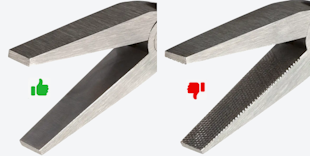
- Non-serrated (smooth) jaws only
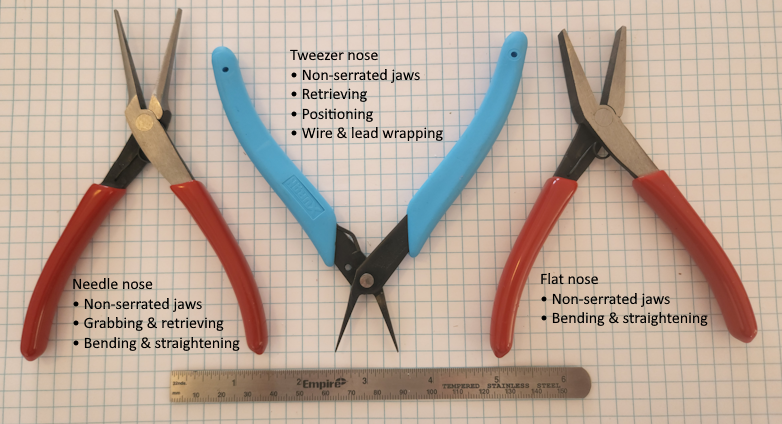
Flat
Straightening and bending
Needle nose
- Grabbing
- Retrieving
- Bending
- Straightening
Tweezer nose
- Exceptionally useful
- Retrieving, positioning, and wrapping wires & leads around turrets
- Jaw width: Taper to ~1.5mm tip
- Desoldering & rework
Use tweezer nose pliers to wrap wires & leads around turrets.
Larger pliers or channel locks
What I use
- Needle nose & flat nose: Tekton
- Tweezer nose: Xuron
Snips
All flush cut (no angled)
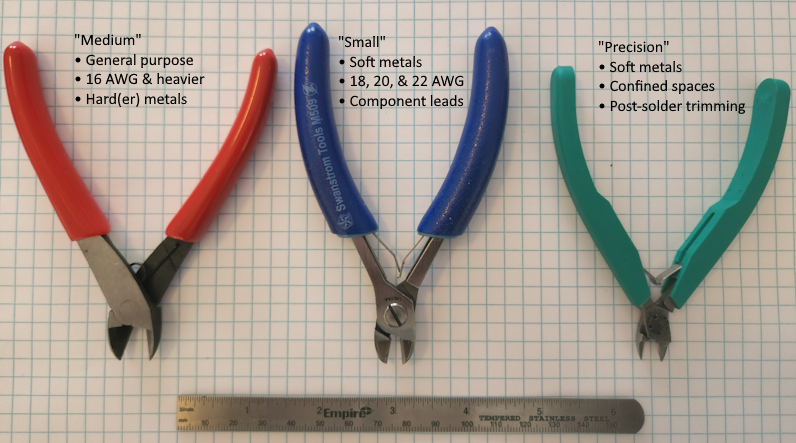
Medium
- General purpose
- Heavier gauge wire (16 AWG or heavier)
- Hard(er) metals (e.g., steel mesh/braid for ground strip or wire shielding)
Small
- Soft metals only (copper & aluminum)
- 18, 20, & 22 AWG
- Component leads
Precision
- Soft metals only (copper & aluminum)
- Limited access areas (e.g., tube socket lugs)
- Post-solder excess wire & component lead trimming
What I use
- Medium: Tekton
- Small: Swanstrom Tools (very reasonably priced on eBay)
- Precision: Excelta (ditto)
Strippers

Likely the most-used
Invest in quality strippers**
Favor quality strippers over sloppy ones. You’re not looking to strip wire as quickly as possible; you’re looking to cleanly remove insulation–and only insulation–without affecting the wire itself.
Favor tight strippers
Loose strippers are commonly associated with cheapness and will only disappoint while becoming more loose the more they’re used and the longer they age. It’s just the way loose strippers are.
You’ll also want tight strippers for consistency once you determine, for example, that the 22 AWG solid cutters are best for your 20 AWG PTFE-insulated stranded wire. You’ll get a consistent cut every time (with practice of course), something not possible with loose strippers.
Avoid cheap strippers
They’ll only disappoint.
The exact “gauge” you use with the strippers won’t necessarily match the wire gauge, especially with differences between solid core & stranded, insulation material and thickness, etc.
Strip with one hand?
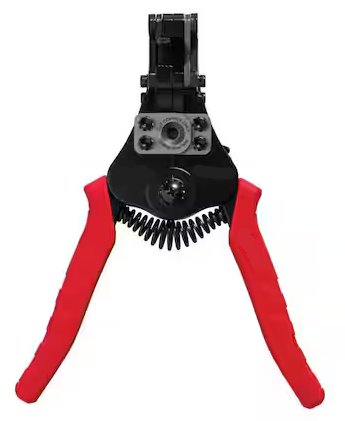
Stripping with one hand isn’t very practical. Remember, the goal is not to strip wire as quickly as possible, but rather only cleanly remove insulation while leaving the wire itself completely unaffected.
One-handed strippers (a.k.a., “automatic” or “single-action” strippers), are not conducive to the stripper’s goal since the single-action entails several actions:
- Grip the wire
- Cut the insulation (and only the insulation)
- Pull the insulation away
- Return the apparatus without crushing the wire, especially stranded (or, remove the wire before the apparatus returns)
You’ll inevitably find yourself stripping wire in a very confined space, and the single action ones aren’t conducive
Professional strippers
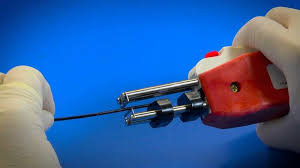
You can spend hours drooling over expensive strippers, such as hot strippers (thermal strippers) that work by melting the insulation. Pros include essentially zero change of cutting the conductor (wire) itself, but cons include the price and potential tight space limitations where a Swiss Army Knife or utility razor blade (and careful patience) could be more appropriate.
Confined spaces & touch-up
- Swiss Army knife
- Utility knife
- Hobby knife
What I use
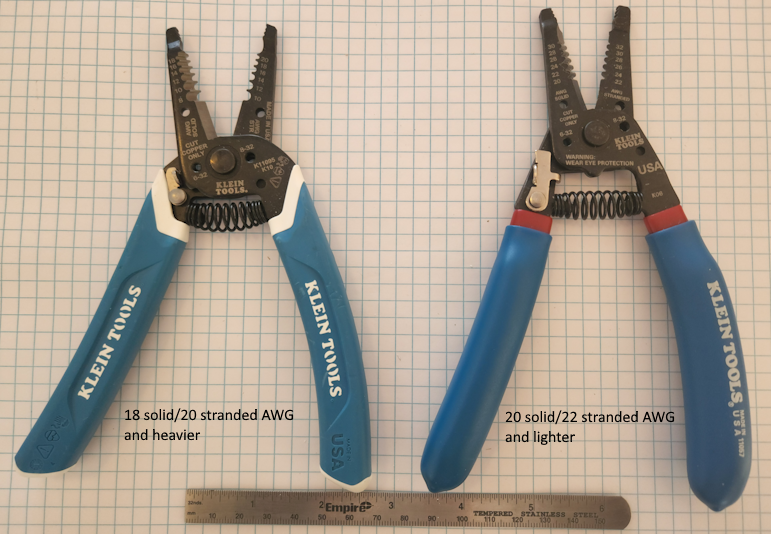
I use these two from Klein, the one of the left generally for 18 & 20 AWG, and the one on the right for 20 & 22 AWG. Two may not be necessary, mileage varies, and these are in my opinion reasonably priced.